
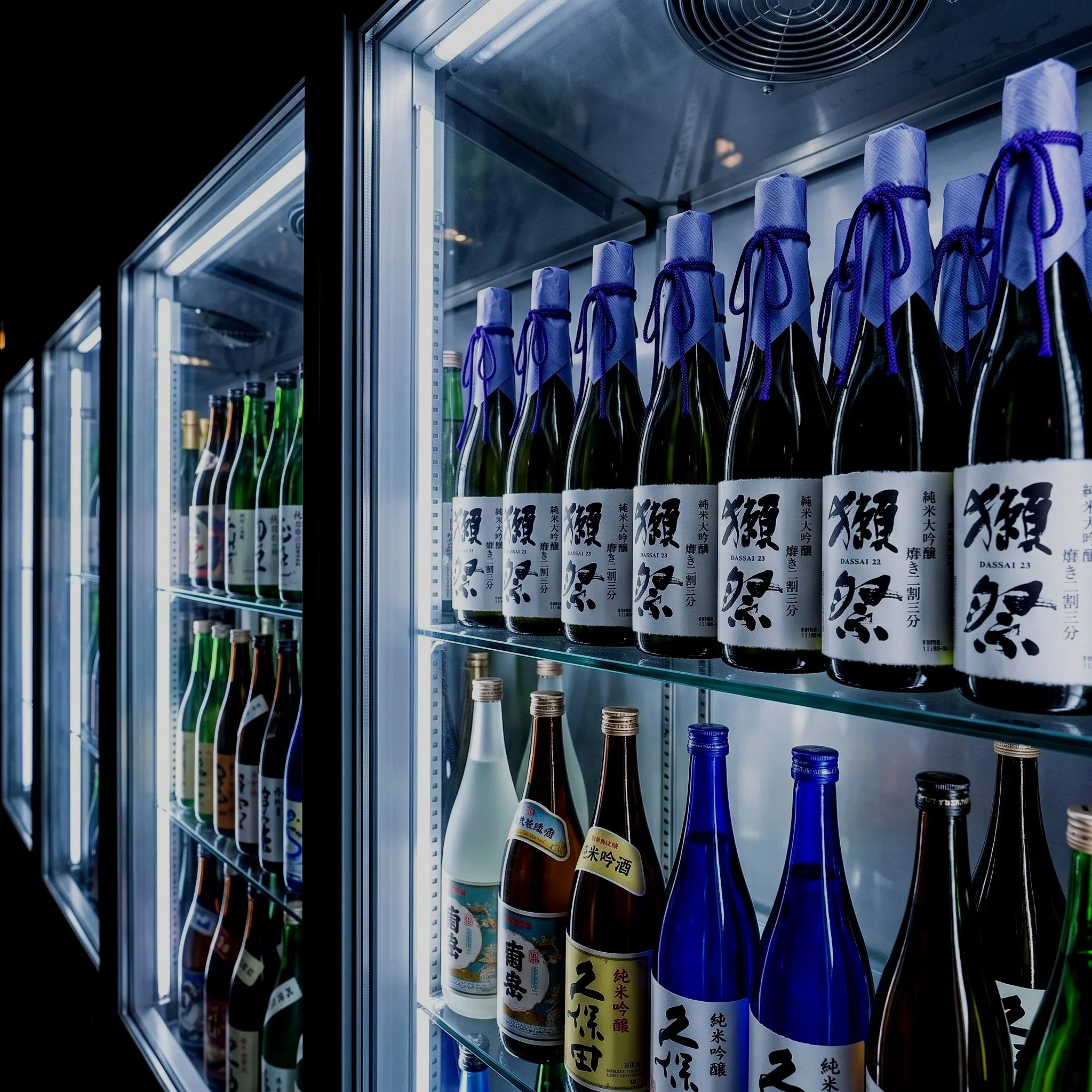
sake Storage
To chill or not to chill
How to store youR sake
Quick answer: Store sake upright, somewhere cool and dark, and keep unpasteurised (nama) and sparkling sake in the fridge at all times. Heat and light are what spoil sake, and both work faster on delicate, aromatic styles. Unopened, most pasteurised sake is at its best within a year of bottling; once opened, finish a daiginjo within a week and an everyday junmai within two to four weeks.
Sake is a fresh drink. Unlike most wine, the overwhelming majority of it is made to be enjoyed young, and almost nothing improves by being forgotten at the back of a warm cupboard. The good news is that looking after it is simple once you know what you're protecting it from.
Sake's two enemies: heat and light
Heat speeds up every chemical reaction in the bottle. A sake kept warm ages in months the way a chilled one ages in years: the fresh fruit and floral notes fade first, the colour deepens towards gold, and a heavier, nuttier, sometimes sulphurous character takes their place. The Japanese word for that stale, over-aged smell is hineka, and researchers have traced much of it to a compound called dimethyl trisulfide, which builds up faster the warmer the sake is kept.
Light does the same job, only quicker. Direct sunlight can noticeably change a sake in a fortnight, and even constant fluorescent or fridge light will dull it over time. This is why so much sake comes in dark green or brown glass, and why Japanese retailers wrap paler bottles in paper.
Time on its own is the gentlest of the three, and the only one you can turn to your advantage. Kept cold and dark, a sake changes slowly. Kept warm and bright, it changes fast — and rarely in a direction you'd choose.
Where to keep your sake
Best: a fridge, or a wine cooler set below 15°C. In Japan most premium sake is matured below 5°C.
Good enough: a cool, dark cupboard well away from the oven, boiler and radiators, at a steady temperature. Swings matter as much as the average.
Worst: a kitchen worktop, a windowsill, the top of the fridge, or anywhere in direct sun.
Always upright. There's no cork to keep moist, and standing the bottle up keeps the sake off the cap.
No dark space? Wrap the bottle in its paper, a tea towel or newspaper. It genuinely helps.
How long each style keeps
These are guides rather than deadlines. Sake doesn't become unsafe; it becomes something other than what the brewer intended. Times run from the bottling date on the label, which Japanese bottles carry instead of a best-before date.
| Style | Unopened | Once opened | Keep it |
|---|---|---|---|
| Junmai, honjozo and everyday sake | About a year from bottling | 2–4 weeks | Cool cupboard, fridge is better |
| Ginjo and daiginjo | 8–10 months; the aromas fade first | About a week | Fridge |
| Nama (unpasteurised) | 6–8 months, refrigerated throughout | 3–5 days | Fridge, always |
| Nigori (cloudy) | 6–12 months, depending on pasteurisation | About a week | Fridge; stand it up, turn gently before pouring |
| Sparkling | Drink young, within months | Same day, or a day or two with a sparkling stopper | Fridge, upright |
| Kimoto, yamahai and genshu | A year or more; these are the sturdiest | 2–4 weeks | Cool cupboard or fridge |
| Koshu (deliberately aged) | Years — age is the point | A month or more | Cool and dark |
| Umeshu and yuzu sake | Years | Several months | Fridge once opened |
Why the delicate styles suffer most
The difference between the rows above comes down to what each style has to lose.
Ginjo and daiginjo are prized for their aromas — apple, melon, pear, banana. Those aromatic compounds are volatile and the first thing to go, so a warm daiginjo loses the very thing you paid for. Dassai 45 Junmai Daiginjo 720ml and Nabeshima Premium Daiginjo Genshu 720ml both belong in the fridge.
Nama sake skips pasteurisation, so the enzymes and any surviving yeast are still active. Keep it cold and it stays vivid and fresh; let it warm up and it turns quickly, sometimes in days. Narutotai Ginjo Nama Genshu 720ml is a good example — our notes say plainly: best stored and served chilled. The same goes for Kameizumi 'Cel - 24' Junmai Ginjo Nama Genshu 720ml and Tedorigawa 'Kinka' Gold Blossom Daiginjo Nama 720ml.
Sparkling sake is losing carbonation from the moment you open it, and bottle-fermented styles like Dassai 45 Sparkling Sake 360ml and Ichinokura Suzune Wabi Sparkling Sake 375ml are alive in the bottle. Cold, upright, and drink it while it's lively.
Kimoto, yamahai and genshu styles are the robust ones: more acidity, more umami, often higher alcohol. Tamagawa 'Red Label' Yamahai Genshu Junmai 720ml and Yoshidagura 'U' Yamahai Muroka Genshu Junmai 720ml will take a couple of weeks in the fridge after opening in their stride.
Deliberately aged sake turns the whole thing on its head. Kamoizumi 'Red Maple' Aged Nama Ginjo Genshu 720ml is unpasteurised, undiluted and aged for two years at 0–5°C, and Tamagawa 'Time Machine' Junmai Kimoto 360ml is brewed to a method from 1712 to taste of molasses and dried apricot. Here the ageing is the brewer's choice, done under control — not a bottle left in a warm kitchen.
Umeshu and yuzu sake are sweeter and lower in aromatic delicacy, so they're the most forgiving things on the shelf. Nanbu Bijin Umeshu (Plum Sake) 720ml and Tsukasabotan Yama Yuzu 720ml will happily last months in the fridge once opened.
How to tell if a bottle is past its best
Trust your nose and eyes before the date on the label.
Colour: a clear sake that has turned deep yellow or brown has aged, often through warmth or light.
Smell: nutty, sherry-like, caramel, or a whiff of cooked cabbage or struck match. That's hineka.
Taste: flat, dull, or unexpectedly heavy and sour where it was once fresh.
Not a problem: a little sediment in a nama or nigori, or a faint prickle in an unpasteurised bottle. Both are normal.
A tired bottle isn't waste. Sake is superb in the kitchen: use it in a marinade, steam clams or mussels with it, or add a splash to a broth or risotto.
Six habits that keep sake fresh
Unpack the moment it arrives. Get nama and sparkling bottles into the fridge straight away, rather than leaving the box by a radiator.
Buy the size you'll drink. A 300ml bottle finished in one evening always beats two-thirds of a 720ml going tired. Dassai 45 Junmai Daiginjo 300ml, Nanbu Bijin Tokubetsu Junmai 300ml and Urakasumi Junmai 300ml are all good in this size.
Re-seal properly and stand it up. Screw the cap back on firmly; for sparkling, use a fizz stopper.
Move the opened bottle to the fridge whatever the style, and pour a glass 15 minutes before you want it if you like it warmer.
Check the bottling date when you buy. Fresher is better for anything fragrant.
Keep it out of the light, including the light inside a glass-fronted fridge.
For more on serving, read our guide to sake and temperature, or start with sake and food pairing if you're deciding what to open tonight.
Frequently asked questions
How long does sake last once opened?
It depends on the style. An everyday junmai or honjozo will be good for two to four weeks in the fridge, a ginjo or daiginjo for about a week, and an unpasteurised nama sake for three to five days. Sparkling sake is best finished the same day.
Does sake go off?
Not in the sense of becoming unsafe — the alcohol sees to that. What happens is that the flavour changes: the fresh, fruity aromas fade and are replaced by a nutty, sherry-like or sulphurous character the Japanese call hineka.
Should sake be kept in the fridge?
Unpasteurised (nama) sake and sparkling sake must be. Everything else keeps better in the fridge but will be fine in a cool, dark cupboard away from the oven. Once a bottle is open, everything goes in the fridge.
Does sake have an expiry date?
Japanese sake isn't legally required to carry a best-before date, so most bottles show the bottling date instead. Treat it as a freshness guide rather than a deadline.
Can you store sake on its side like wine?
No. Sake is best stored upright. There's no cork to keep moist, and standing the bottle up keeps the sake away from the cap and reduces the surface in contact with air.
Can old sake be used for anything?
Yes. A bottle that's lost its sparkle is still excellent in cooking — in a marinade, a broth, a risotto or steamed with clams.

Next: Sake & Regionality