
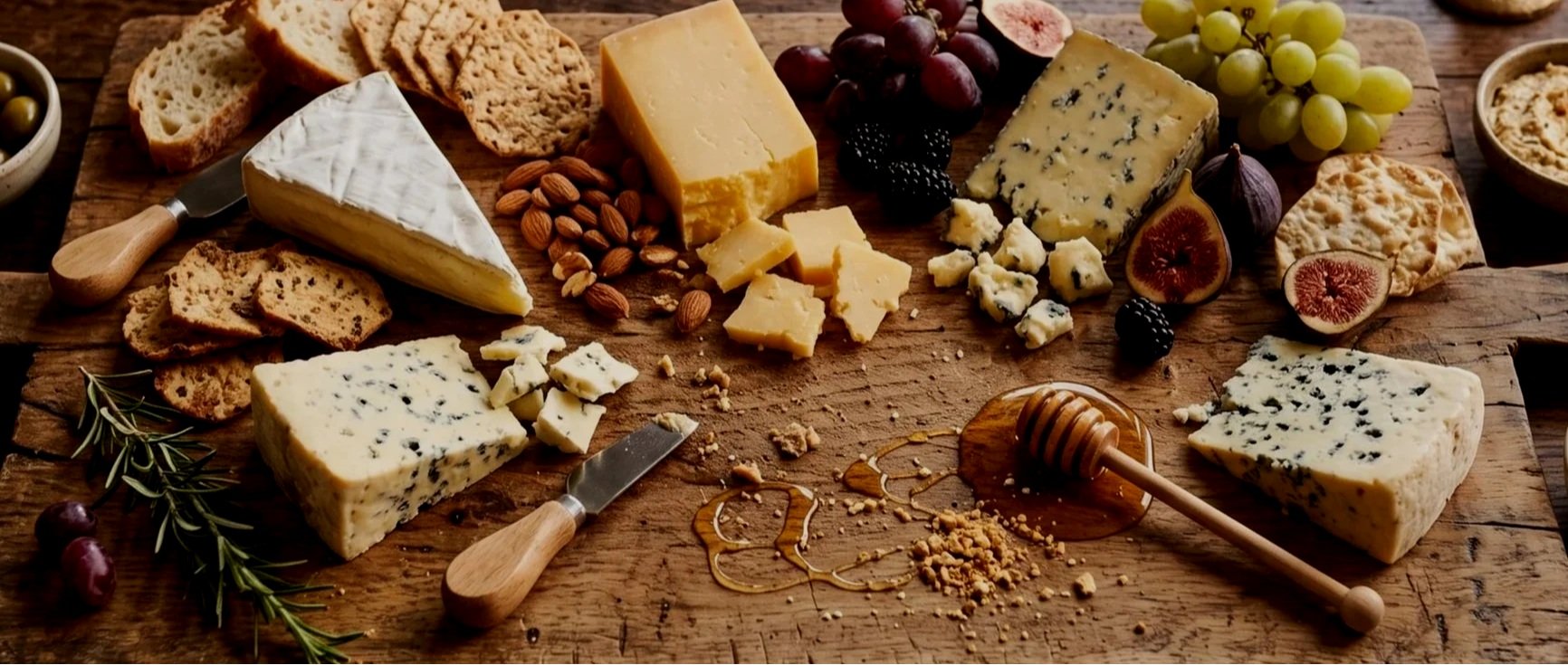
sake and Cheese
Sake and cheese: the pairing guide
Quick answer: Sake and cheese are a brilliant match. Sake's umami and soft lactic notes echo the flavours in cheese, and with no tannin to clash, it's more forgiving than most red wines. As a rule, pair fresh cheeses with light, chilled sake, hard cheeses with savoury junmai at room temperature, and blue cheeses with rich or sweeter sake.
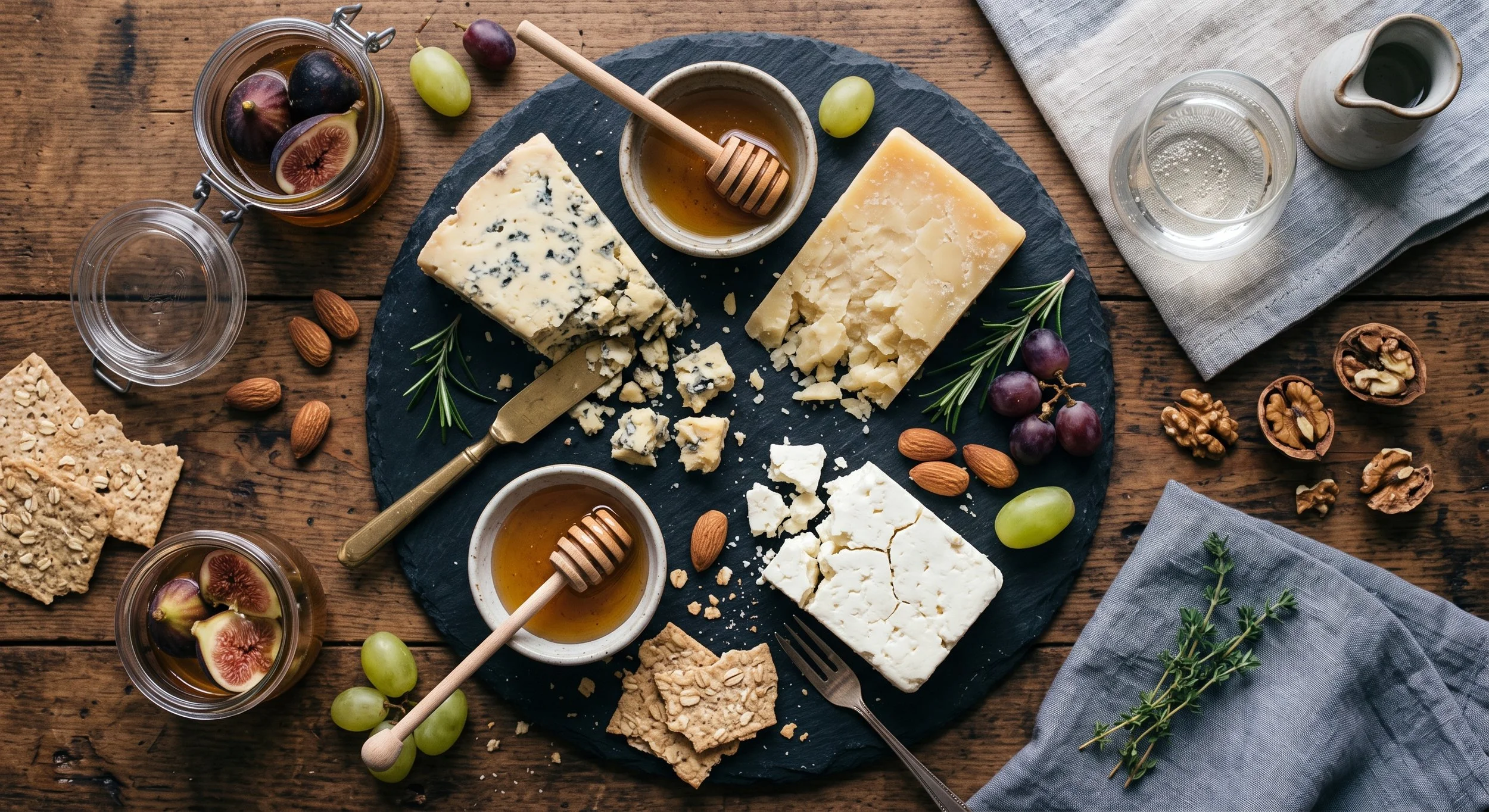
If you think sake belongs only next to sushi, the cheeseboard is where we'd love to change your mind. Sake and cheese are both products of fermentation, and they share more than you'd expect: savoury umami, gentle creaminess and a lactic tang. Put them together and something rather lovely happens. Here's how to get it right, and which bottles to open.
For the principles behind all of this, see our guide to sake and food, or read how temperature changes sake.
Why does sake work so well with cheese?
Three reasons, and none of them needs a sommelier's certificate.
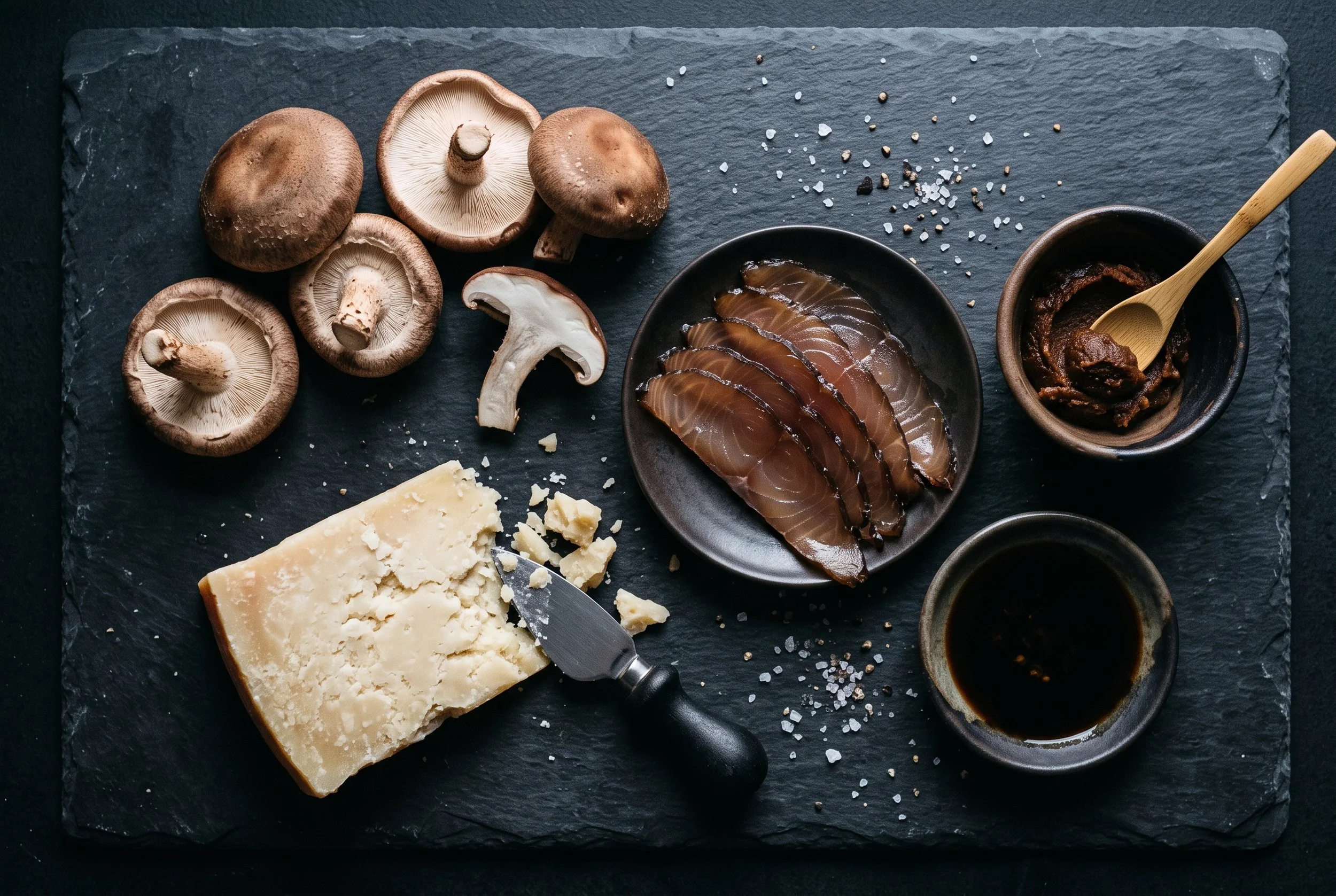
Umami loves
umami
Umami meets umami. Sake is rich in amino acids, the building blocks of umami. Aged cheeses like Parmesan and Cheddar are packed with it too. Put the two together and each makes the other taste deeper and more savoury.
Lactic harmony. Sake fermentation produces lactic acid, the same acid you find in dairy. That's why many sakes carry notes of yoghurt, cream or even vanilla ice cream, and why they feel so at home next to cheese.
No tannin, low acidity. Red wine's tannins can turn metallic against some cheeses. Sake has no tannin and much lower acidity than wine, so it rarely fights with anything on the board.
Which sake goes with which cheese?
Fresh and soft cheeses: brie, Camembert, goat's cheese, burrata
Soft, milky cheeses want a light, clean sake served chilled. Fruity junmai daiginjo or ginjo styles lift the creaminess without smothering it.
Kubota Junmai Daiginjo 720ml: clean and crisp with floral aromas and a sharp finish. Our tasting notes pair it with soft cheese. Serve slightly chilled.
Dassai 45 Junmai Daiginjo 720ml: soft, fruity and clean, the modern benchmark for premium sake. A lovely match for mild cheeses. Serve lightly chilled.
Hard and aged cheeses: Cheddar, Parmesan, Manchego, Comté
Here you want savoury depth to match. Junmai and kimoto styles bring rice-driven umami that meets aged cheese head on. Try them at room temperature, or gently warmed, to bring out their rounder side.
Nanbu Bijin Tokubetsu Junmai 720ml: our go-to all-rounder, with melon and pear flavours and an umami depth that grows as it warms from chilled to room temperature. We list cheese among its best matches.
Sohomare Tokubetsu Kimoto Junmai 720ml: crisp, flavourful and punchy, and paired in our notes with Iberico ham and Manchego. Chilled to lightly warmed.
Kubota Hyakuju Honjozo 720ml: dry, earthy and mellow, with coffee, sesame and caramel notes that suit nutty, aged cheeses.
Yoshidagura 'U' Yamahai Muroka Genshu Junmai 720ml: pink grapefruit acidity and a svelte texture. Try it with shaved Parmesan over a green bean salad, as our tasting notes suggest.
Blue cheeses: Stilton, Gorgonzola, Roquefort
Blue cheese is salty, tangy and bold, so it needs a sake with some sweetness or richness to balance it, in the same way port works with Stilton. This is the pairing that tends to win over sceptics.
Tamagawa 'Time Machine' Junmai Kimoto 360ml: brewed to a method first recorded in 1712, this amber, honeyed sake drinks like a fine dessert wine. Blue cheese is its perfect partner. Serve at room temperature to warm.
Tosatsuru Junmai Daiginjo 720ml: off-dry and velvety with a hint of strawberry. Our notes pair it with blue cheese and pâté.
Tamagawa 'Red Label' Yamahai Genshu Junmai 720ml: rich, robust and complex, made with the traditional yamahai method. One for more adventurous drinkers, and bold enough for challenging blue cheeses.
Washed-rind cheeses: Taleggio, Époisses, Stinking Bishop
Pungent, funky cheeses love bubbles and a touch of sweetness to refresh the palate.
Masumi Sparkling Sake 750ml: savoury umami with a lingering honey finish, and paired in our notes with washed-rind cheeses. Serve well chilled.
The all-rounder for a mixed cheeseboard
Only opening one bottle? Choose a fruity, balanced sake with enough body for harder cheeses and enough freshness for soft ones.
Dassai 39 Junmai Daiginjo 720ml: tropical fruit on the nose, smooth and mellow, with a clean, refreshing finish. Our tasting notes pair it with tapas and cheese plates.
Narutotai Ginjo Nama Genshu 720ml: unpasteurised and undiluted, bone dry, with yoghurt-like acidity and roasted hazelnut notes that suit a cheese course. Best served chilled.
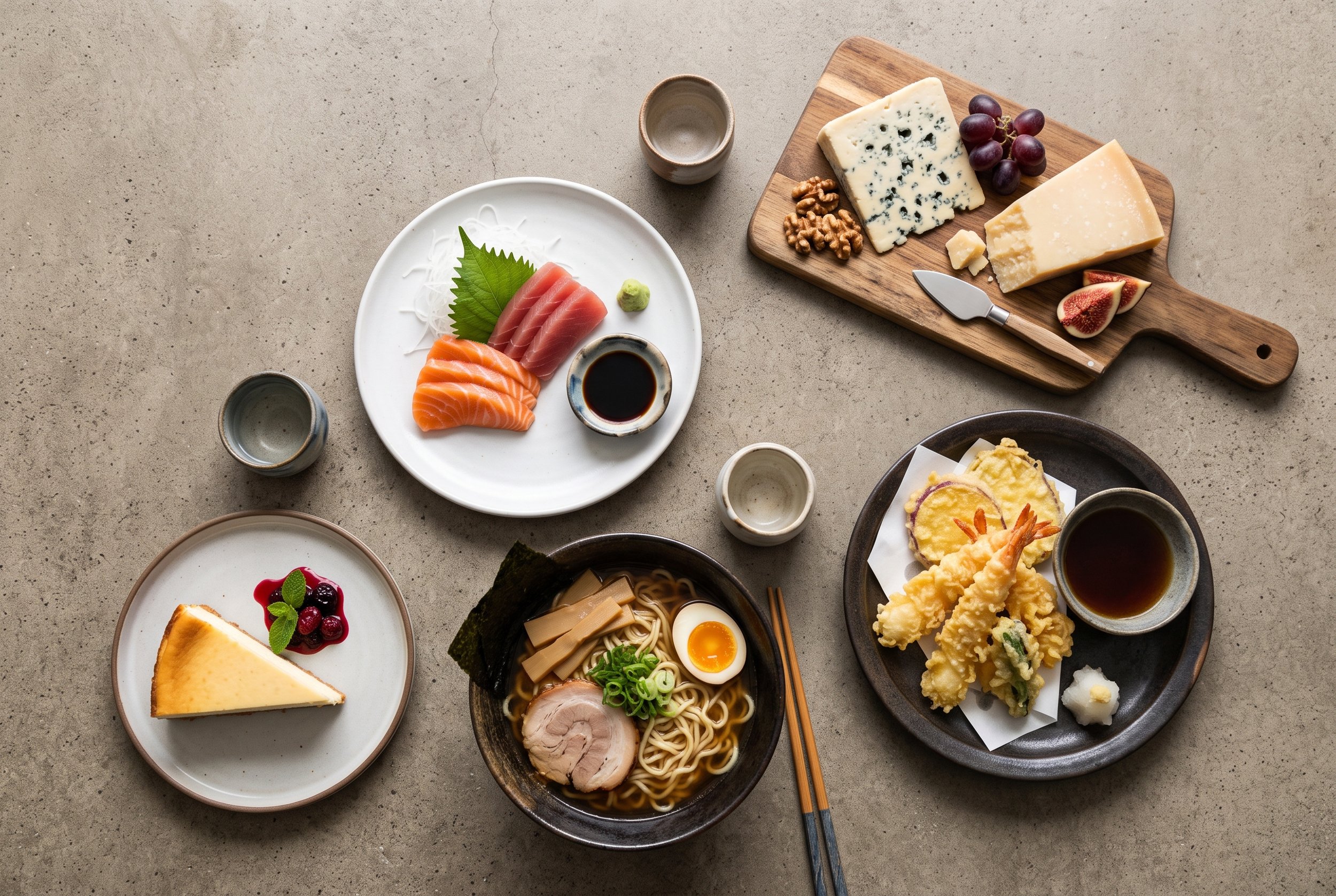
Sake doesn’t fight with food
日本酒は料理を選ばない
How to host a sake and cheese tasting at home
Pick three or four cheeses from different families: one soft, one hard, one blue, and a wildcard.
Open two or three contrasting sakes: a light, fruity one, a savoury junmai and a rich or sweet style. Smaller 300ml bottles are ideal for this.
Taste in order from mildest to strongest cheese, and try every sake with every cheese. The surprises are half the fun.
Play with temperature. Let a savoury junmai warm up in the glass and taste it again with the Cheddar. You'll notice the difference.
Keep it simple on the side. Plain crackers, a few grapes and some rice crackers are all you need.
Our single best piece of advice? Get stuck in. There are no wrong answers, only pairings you'll want to repeat.
Shop the sakes in this guide


Frequently asked questions
What sake goes best with cheese?
There's no single answer, but a medium-dry junmai or tokubetsu junmai is the safest all-rounder for a mixed cheeseboard. Its gentle acidity and umami sit happily alongside everything from brie to Cheddar. For blue cheese, reach for something sweeter and richer.
Does sake go with blue cheese?
Yes, and it's one of the best matches. Sweeter, richer styles like kimoto or yamahai sake balance the salt and tang of Stilton or Gorgonzola in the same way port does.
Should sake be warm or cold with cheese?
Chilled for fresh, soft cheeses; room temperature or gently warm for hard and aged cheeses. Warming brings out sake's savoury, rounded side, which suits the nutty flavours of aged cheese.
Is sake better than wine with cheese?
Perhaps controversial but it's often easier. Sake has lower acidity and no tannin, so it rarely clashes with cheese the way a big red wine can, and its umami tends to make cheese taste richer.
Size: 720ml | ABV: 16%
In 3 words: Clean, soft and fruity
The benchmark of modern craft sake, Dassai 45 is a global best-seller celebrated for its approachable elegance. By milling top-grade Yamadanishiki rice down to 45% to remove all impurities, the wizards at Asahi Shuzo brewery achieve a remarkably clean and sophisticated profile at a decent price..
The Experience: Expect bucket-full of fruity aroma featuring honeydew melon and fresh green apple. On the palate, it delivers a honey-like sweetness balanced out by a mild, refreshing acidity. The mouthfeel is notably smooth and slightly creamy, leading to a crisp finish with no alcoholic bite.
The Verdict: Supremely balanced and consistently high-quality, Dassai 45 is the ultimate "gateway" bottle and a fail-safe gift for sake newcomers. Best served well-chilled in a wine glass to accentuate its floral aromatics, it pairs effortlessly with everything from delicate sashimi to light salads and creamy cheeses.
Grade: Junmai Daiginjo
Brewery: Asahi
Region: Yamaguchi
Rice polishing: 45%
Save with our Dassai 45 3-pack or 6-pack, or contact us for discounts on orders by the case.